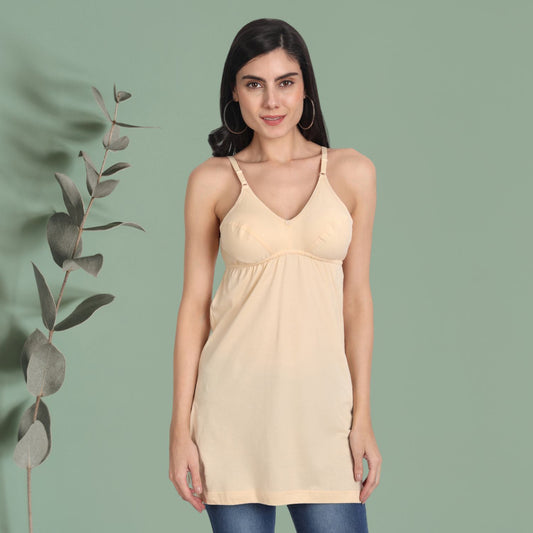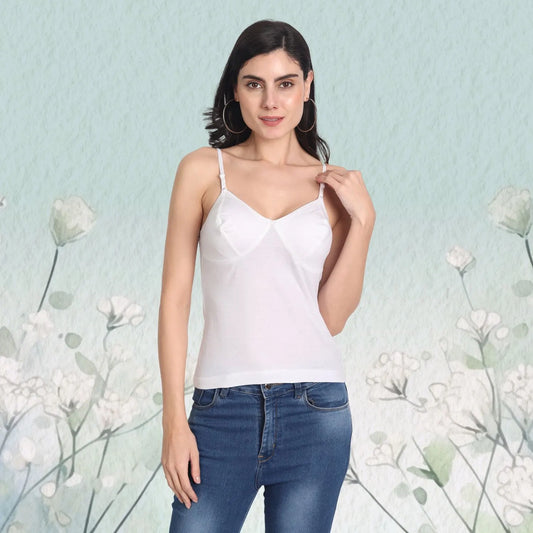

Priya had been saving up her pocket money for weeks. She was finally ready to buy a ‘real’ bra, not the simple beginner ones her mom bought from the local market. Scrolling through an e-commerce website, she saw a world of beautiful options. But then came the confusion: 32B, 34C, 36A. The numbers and letters looked like a secret code. How was she supposed to know which one was right for her? She felt overwhelmed and was about to close the tab. If you've ever felt like Priya, lost in the confusing world of online bra size charts, this guide is for you. Buying a bra online for the first time, especially in India, can feel tricky, but we’re going to break it down into super simple steps.
Table of Contents
- Why Your Bra Size Matters More Than You Think
- Decoding Bra Sizes: The Mystery of Numbers and Letters
- Your At-Home Bra Fitting Kit: What You'll Need
- Step-by-Step: How to Measure Your Bra Size Accurately
- Putting It All Together: How to Use a Bra Size Chart
- Common Bra Fit Problems and What They Mean
- The Secret of "Sister Sizes": Your Backup Plan
- Beyond the Size: Choosing the Right Bra Style
- Quora Corner: Your Bra Fitting Questions Answered
- Frequently Asked Questions (FAQ)
Why Your Bra Size Matters More Than You Think
You might think, "It's just a bra, as long as it covers me, it's fine." But that’s not true! Wearing the wrong bra size isn't just uncomfortable; it can actually affect your health. Studies show that a vast majority of women—some reports say up to 80%—are wearing the wrong size. This common mistake can lead to a whole list of problems.
- Pain and Discomfort: A bra that's too tight can dig into your skin, while one that's too loose offers no support. This can cause shoulder pain, neck strain, and even chronic backaches because your muscles are working overtime to provide the support your bra isn't giving.
- Poor Posture: Without proper support, especially for those with a fuller bust, you might find yourself slouching. A well-fitting bra lifts your breasts and helps you stand up straighter and taller.
- Skin Issues: Straps that dig in can leave painful red marks and even cause skin irritation or chafing. An ill-fitting underwire can poke and prod, which is not only annoying but can also damage your breast tissue over time.
- Loss of Confidence: When you're constantly adjusting your bra, pulling up straps, or feeling uncomfortable, it's hard to feel your best. The right bra fits so well you almost forget you're wearing it. It creates a smooth silhouette under your clothes, making your outfits look better and helping you feel more confident and put-together.
Think of your bra as the foundation of your outfit. If the foundation is shaky, the whole structure will be off. Taking a few minutes to find your correct size is an investment in your daily comfort and long-term health.
Decoding Bra Sizes: The Mystery of Numbers and Letters
A bra size has two parts: the number (like 34) and the letter (like C). Let’s break down what each part actually means. Once you understand this, it's no longer a secret code!
The Number: Your Band Size
The number represents your band size. This is the measurement of your ribcage, just underneath your breasts. A common misconception is that the cups provide all the support, but in reality, about 80% of a bra's support comes from the band. It's the anchor of the bra. If the band is too loose, it will ride up your back, and the straps will have to do all the heavy lifting, leading to sore shoulders. If it's too tight, it will feel restrictive and dig into your skin.
The band size is measured in inches and usually comes in even numbers like 30, 32, 34, 36, and so on.
The Letter: Your Cup Size
The letter represents your cup size. Now, here's the most important thing to understand: the cup size is not a fixed measurement of breast size. A 'C' cup on a 32 band is NOT the same volume as a 'C' cup on a 38 band. The cup size is relative to the band size.
So, what does it measure? The cup size represents the difference between your bust measurement (the fullest part of your chest) and your band measurement (your ribcage). The larger the difference, the larger the cup size letter.
- A small difference means a smaller cup letter (like A or B).
- A larger difference means a larger cup letter (like D, E, or F).
Understanding this relationship between the band and cup is the key to finding a bra that fits perfectly.
Your At-Home Bra Fitting Kit: What You'll Need
You don't need any fancy equipment to find your bra size. The best part is you can do it right in the comfort of your own room. Here’s all you need:
- A Flexible Measuring Tape: This is the soft, bendy kind that tailors use, not a stiff metal construction tape. If you don't have one, you can use a piece of string or ribbon and then measure it against a regular ruler.
- A Mirror: Standing in front of a mirror will help you ensure the tape is straight and level all the way around your body.
- Your Best-Fitting, Non-Padded Bra: Measuring while wearing a thin, non-padded bra will give you the most accurate lift and shape. Avoid sports bras or padded bras as they can alter your measurements.
- A Pen and Paper (or your phone): To jot down your measurements so you don't forget them!
Step-by-Step: How to Measure Your Bra Size Accurately
Ready? Let’s do this. It will only take five minutes.
Step 1: Measure Your Band Size
This measurement will determine the number part of your bra size.
- Stand straight and relax your shoulders.
- Wrap the measuring tape snugly around your ribcage, directly under your breasts where the bra band would normally sit.
- Make sure the tape is parallel to the floor all the way around. Use the mirror to check your back. It shouldn't be dipping down or riding up.
- The tape should be snug, but not so tight that you can't breathe. You should be able to fit one finger between the tape and your body.
- Breathe out, and read the measurement in inches.
- Now, for the calculation: Round the measurement to the nearest whole number. If the number is even (like 30, 32), this is your band size. If the number is odd (like 29, 31), add one inch to get to the next even number. For example, if you measure 31 inches, your band size is 32.
Example: Your measurement is 31.5 inches. You round it to 32. Since 32 is an even number, your band size is 32.
Step 2: Measure Your Bust Size
This measurement will help determine the letter part of your bra size.
- Stand straight, keeping the measuring tape parallel to the floor.
- Wrap the tape around the fullest part of your bust. This is usually at the same level as your nipples.
- The tape should be comfortably loose. Don't squish your chest! It should just skim your body.
- Read the measurement in inches and round it to the nearest whole number. Write this number down.
Example: Your bust measurement is 35 inches.
Step 3: Calculate Your Cup Size
This is where the magic happens! It's simple subtraction.
Bust Measurement – Band Measurement = The Difference
Using our examples:
35 inches (Bust) – 32 inches (Band) = 3 inches (The Difference)
This difference in inches determines your cup letter. Here is a standard conversion:
- 0-inch difference = AA Cup
- 1-inch difference = A Cup
- 2-inch difference = B Cup
- 3-inch difference = C Cup
- 4-inch difference = D Cup
- 5-inch difference = E (or DD in some brands)
- 6-inch difference = F (or DDD in some brands)
Since our difference was 3 inches, the cup size is C.
So, the final bra size is **32C**!
Putting It All Together: How to Use a Bra Size Chart
Now that you have your measurements and your calculated size, you're ready to tackle the online charts. Every e-commerce site or brand will have a “Size Guide” or “Size Chart” link on its product pages. You MUST click on it.
Warning: Do not assume that your size is the same across all brands. Sizing can vary slightly from one brand to another, just like with jeans or T-shirts. Always, always check the specific chart for the brand you're buying.
A typical bra size chart might look something like this:
| Band Size (Underbust in inches) | Bra Band Size to Order |
|---|---|
| 27-28 | 32 |
| 29-30 | 34 |
| 31-32 | 36 |
| Difference (Bust - Band) | Cup Size to Order |
|---|---|
| 1 inch | A |
| 2 inches | B |
| 3 inches | C |
You would find your band measurement in the first table to confirm your band size, and then use your calculated difference in the second table to find your cup size. Some brands combine it all into one big chart. Just take your time and follow the rows and columns. It's much simpler now that you know what numbers you're looking for.
Common Bra Fit Problems and What They Mean
So you’ve ordered your bra using your new size, but how do you know if it *really* fits well? Your body will give you clues. Here are some common problems and how to solve them. For a deeper dive, check out our guide on how to fix common bra problems.
- The band rides up your back. This is the most common sign of a bad fit. It means your band is too loose. The band should sit in a straight, horizontal line across your back. The Fix: Go down a band size (e.g., from a 36 to a 34).
- The straps dig into your shoulders. If your straps are leaving red marks, it means they're doing all the work. This is another sign that your band is too loose and not providing enough support. The Fix: Try a smaller band size.
- The cups are gaping at the top. If there’s empty space between your breast and the cup, it means the cup is too big. The Fix: Go down a cup size (e.g., from a C cup to a B cup).
- You're spilling out of the cups (the “quad-boob” effect). If your breasts are bulging over the top, front, or sides of the cups, the cups are too small. The Fix: Go up a cup size (e.g., from a C cup to a D cup).
- The center panel (gore) doesn't lie flat. The piece of fabric between the two cups should sit flat against your breastbone. If it’s lifting away, your cups might be too small. The Fix: Go up a cup size.
The Secret of "Sister Sizes": Your Backup Plan
What if you try a 34C and the band feels great but the cups are a tiny bit too big? Or what if your perfect size is sold out? This is where sister sizes come to the rescue! Sister sizes are groups of bra sizes that have the same cup volume. It’s a brilliant trick for online shopping.
Here’s the simple rule:
- To get a TIGHTER band: Go DOWN one band size and UP one cup size.
- To get a LOOSER band: Go UP one band size and DOWN one cup size.
Let's say your calculated size is **34C**.
- Its sister size with a tighter band would be **32D**.
- Its sister size with a looser band would be **36B**.
All three of these sizes (32D, 34C, 36B) have the same cup volume, but the band length is different. So if a 34C feels too loose in the band, trying a 32D might give you that perfect, snug fit you need.
Beyond the Size: Choosing the Right Bra Style
Finding your correct size is the most important step, but the style of the bra also matters. Different bras are designed for different purposes and different outfits. Especially for your first few purchases, focusing on comfort is a great idea. For more tips on daily wear, you might like our article on the best bras for daily use.
- Non-Padded, Non-Wired Bras: These are often made of soft, breathable cotton and are perfect for everyday comfort. They provide natural shape and support without any bulky padding or poking wires. Ideal for long hours at school, college, or just lounging at home.
- T-Shirt Bras: These bras have seamless, molded cups that create a smooth look under fitted tops and T-shirts. They are a wardrobe essential.
- Full Coverage Bras: As the name suggests, these bras cover the entire breast, which prevents spillage and offers maximum support. They are a great choice for women with fuller busts.
- Sports Bras: If you're active, a good sports bra is non-negotiable. It’s designed to minimize bounce and provide support during exercise.
As you get more comfortable, you can explore other styles. But for a first-time online shopper, a simple, comfortable, non-wired cotton bra is a fantastic starting point.
Quora Corner: Your Bra Fitting Questions Answered
We see these questions all the time online. Here are some quick answers to common queries from first-time shoppers.
1. I'm a teenager buying my first bra online, what should I look for?
For your first bra, comfort and simplicity are most important. Look for styles that are soft, breathable, and easy to wear. A non-padded, non-wired bra made from a cotton blend is a perfect choice. It provides gentle support without feeling restrictive. Styles like our Juhi Regular Bra are designed for exactly this kind of all-day comfort.
2. I have a larger bust and need a comfortable bra for daily use. What do you recommend?
For those with a fuller bust, support is key, but you shouldn't have to sacrifice comfort. Look for bras with full coverage cups to prevent spillage and wider, adjustable straps to distribute weight evenly and avoid digging. A non-wired design can still be incredibly supportive if it has a strong, well-fitting band. Our Full Coverage Plus Size Bras are specifically designed to offer great support and comfort for daily wear.
3. I hate underwires but need good support. What are my options?
You are not alone! Many people find underwires uncomfortable. The great news is that wire-free technology has come a long way. You can get excellent support from a non-wired bra. The secret lies in the construction: a firm, wide underband, supportive side panels, and seamed cups all contribute to lift and shape. Check out styles like our Kiran Non-Wired Bra, which focuses on providing full support without a wire.
Frequently Asked Questions (FAQ)
1. How often should I measure my bra size?
- Your bra size can change over time due to things like weight fluctuations, hormonal changes, pregnancy, or even just aging. It's a good idea to re-measure yourself every 6 to 12 months, or whenever you feel your current bras are no longer comfortable.
2. What's the difference between Indian bra sizes and UK/US sizes?
- Generally, many Indian brands follow UK sizing conventions, especially for cup sizes (e.g., DD, E, F). However, US sizing often uses different letters for larger cups (e.g., DDD). The band sizes are usually consistent in inches (32, 34, etc.). The most important rule is to ignore the country label and always rely on your measurements in inches or centimeters and compare them against the specific brand's size chart.
3. Can I wear the same bra size across all brands?
- Unfortunately, no. Just like a size 'M' t-shirt can fit differently from one store to another, bra sizing can also have minor variations between brands. One brand's 34C might fit slightly differently than another's. This is why it is crucial to use your measurements as a guide and check the size chart for every new brand you try.
4. My two breasts are different sizes. What should I do?
- This is completely normal! Most women have one breast that is slightly larger than the other. The rule of thumb is to always fit your bra to the larger breast to avoid spillage and discomfort. If the other cup has a slight gap, you can look for bras with stretch-lace cups or use a small insert (a “cookie”) on the smaller side to even things out.
5. Does a new bra need to fit on the tightest hook?
- No, it’s the opposite! A brand new bra should fit perfectly and snugly on the loosest hook. This is because the band will naturally stretch out over time with wear and washing. As it stretches, you can move to the middle hook, and then the tightest hook, to maintain a snug fit and extend the life of your bra. If it fits on the tightest hook from day one, you have nowhere to go once it stretches.
Your Journey to the Perfect Fit Starts Now
Stepping into the world of online bra shopping doesn't have to be a game of guesswork. You are now equipped with the knowledge to measure yourself correctly, understand the language of bra sizes, and confidently read bra size charts. Remember the golden rules: measure your band, measure your bust, calculate the difference for your cup size, and always, always refer to the specific brand's size chart before you click 'buy'.
Finding the right bra is a form of self-care. It's about giving your body the support and comfort it deserves every single day. A well-fitting bra can transform your posture, make your clothes look better, and boost your confidence from the inside out. Don’t be discouraged if you need to try a couple of sizes to find your perfect match—your body is unique, and so is your ideal fit. Use the concepts of sister sizing as your secret weapon if your exact size isn't available. You're no longer just a shopper; you're an informed buyer ready to take control of your comfort.
With this guide, you can finally say goodbye to the discomfort of digging straps and gaping cups. Welcome to a world where your bra feels less like a necessary evil and more like a supportive best friend. Happy shopping!
For further reading and reference:
- Bra size - Wikipedia
- Bra Size Calculator - Calculator.net
- How to Measure and Calculate Your Bra Size - Lane Bryant
- Shop By Bra Size - Bare Necessities
- Bra Size Calculator | Bra Size Chart, Video & Guide - Victoria's Secret